
The Steve Jobs Algorithm:
Selling Like a Genius
Published July 30, 2024
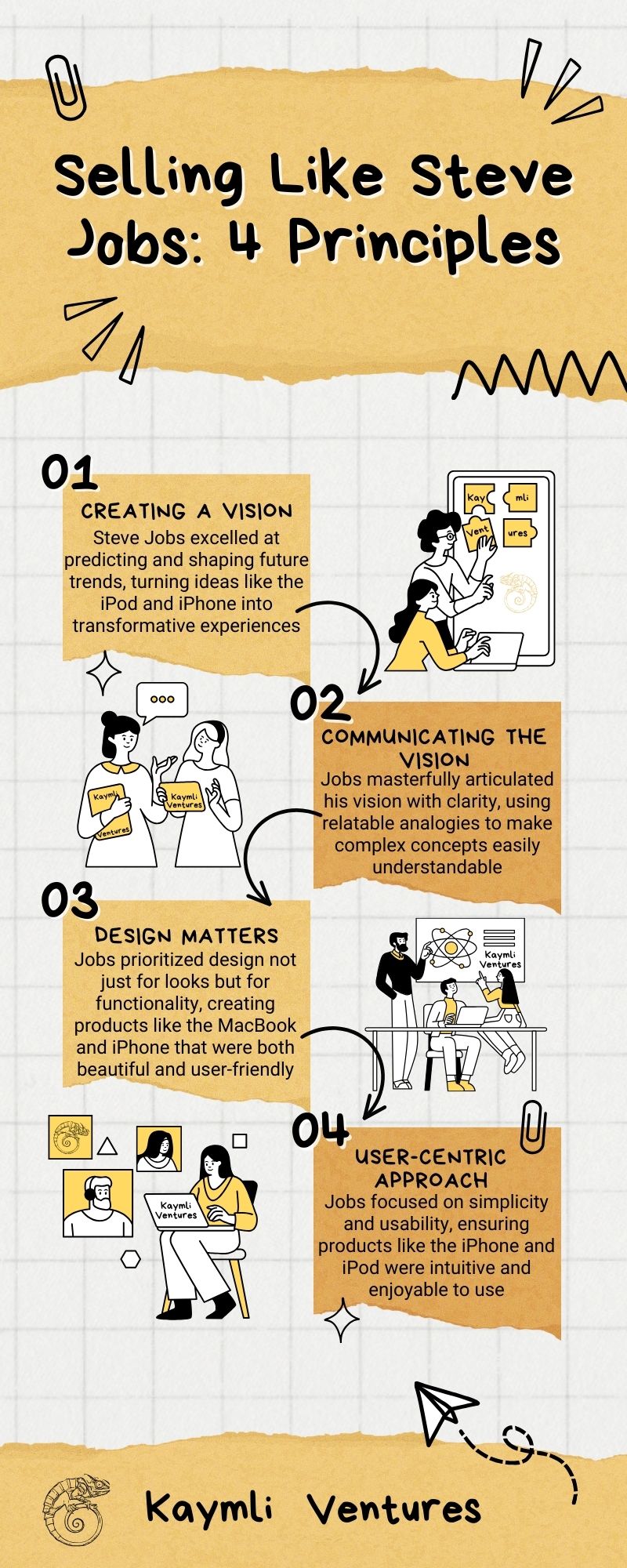
When we talk about sales and marketing brilliance, Steve Jobs stands out as an unmatched genius. Not just the co-founder of Apple, Jobs was a visionary who reshaped entire industries and redefined our interaction with technology. His knack for foreseeing and creating products that people didn’t even know they needed made him one of the greatest salespeople of our time.
From the Macintosh to the iPod, iPhone, and iPad, Jobs consistently delivered groundbreaking products. These innovations didn’t just capture the market’s imagination; they established Apple as one of the most valuable companies globally. Understanding the principles that Jobs applied to his products can offer invaluable insights for anyone looking to enhance their sales strategy.
Visionary Thinking
Creating a Vision
Steve Jobs was a master at envisioning the future and creating products that fit into that vision. His ability to see beyond the current market and predict future trends was a key factor in his success. Jobs didn’t just create products; he crafted experiences that anticipated what consumers would want, often before they even realized it themselves.
Take the iPod, for example. It wasn’t just a music player; it was a reinvention of how people listened to music. Jobs envisioned a world where people could carry their entire music library in their pocket, and he made that vision a reality. Similarly, the iPhone revolutionized the smartphone market by combining a phone, an iPod, and an internet communicator into one device, fundamentally changing the way people interacted with technology.
Communicating the Vision
Having a vision is one thing, but being able to communicate it effectively is what sets great leaders apart. Jobs had an unparalleled ability to articulate his vision in a way that was both inspiring and understandable. He was a storyteller at heart, using this skill to convey the potential of his products to both his team and the public.
Jobs’ presentations were legendary. He simplified complex ideas and made them accessible, often using analogies and metaphors to drive his points home. For example, during the launch of the original iPhone, Jobs described it as three devices in one: “a widescreen iPod with touch controls, a revolutionary mobile phone, and a breakthrough internet communications device.” This clear and concise message helped people immediately grasp the significance of the product.
Jobs’ passion for his vision was infectious. His enthusiasm and belief in his products inspired not only consumers but also his employees, driving them to achieve the extraordinary. By clearly communicating his vision and instilling a sense of purpose, Jobs created a strong, cohesive team dedicated to bringing his ideas to life.
Focus on Design and User Experience
Design Matters
Steve Jobs had an unwavering belief that design was not just about how a product looked but how it worked. He understood that good design was integral to creating products that people would love and find intuitive to use. Jobs’ obsession with design can be seen in every Apple product, from the sleek lines of the MacBook to the minimalistic elegance of the iPhone.
Jobs partnered with legendary designer Jony Ive to create products that were not only beautiful but also functional. The design philosophy was simple: make products that are easy to use and pleasing to the eye. This approach led to innovations such as the unibody aluminum MacBook, which was both sturdy and stylish, and the iPhone, which featured a revolutionary touch interface that set a new standard for smartphones.
User-Centric Approach
At the heart of Jobs’ design philosophy was a relentless focus on the user experience. He believed that technology should serve the user, not the other way around. This user-centric approach meant that Apple products were designed with the end-user in mind, prioritizing ease of use, intuitive interfaces, and seamless integration.
The iPhone is a prime example of this principle in action. Before its release, smartphones were often complicated and cumbersome. Jobs aimed to create a device that anyone could use without needing a manual. The result was an intuitive touch interface that allowed users to navigate with simple gestures. This focus on simplicity and usability was a key factor in the iPhone’s massive success.
Another example is the design of the iPod. Jobs insisted on a device that could be operated with just one hand, leading to the creation of the iconic click wheel. This innovation made it easy for users to scroll through their music library and select songs quickly, enhancing the overall user experience.
Jobs also paid close attention to the packaging and presentation of Apple products. He understood that the experience began the moment a customer opened the box. This attention to detail extended to every aspect of the product, creating a sense of excitement and anticipation that enhanced the overall experience.
Conclusion
Steve Jobs’ visionary thinking and focus on design and user experience were fundamental rules that underpinned his success. By prioritizing aesthetics and usability, Jobs created products that were not only visually appealing but also easy and enjoyable to use. This commitment to design excellence and user satisfaction helped Apple build a loyal customer base and set new standards in the tech industry.
In essence, selling like Steve Jobs means having a clear vision, communicating it effectively, and always putting the user experience at the forefront. Whether you’re an entrepreneur, a marketer, or someone interested in the art of selling, the lessons from Steve Jobs’ career can inspire and guide you in achieving your own success.