
Budget 2024: A Game - Changer
for India's Startup Ecosystem
Published July 30, 2024
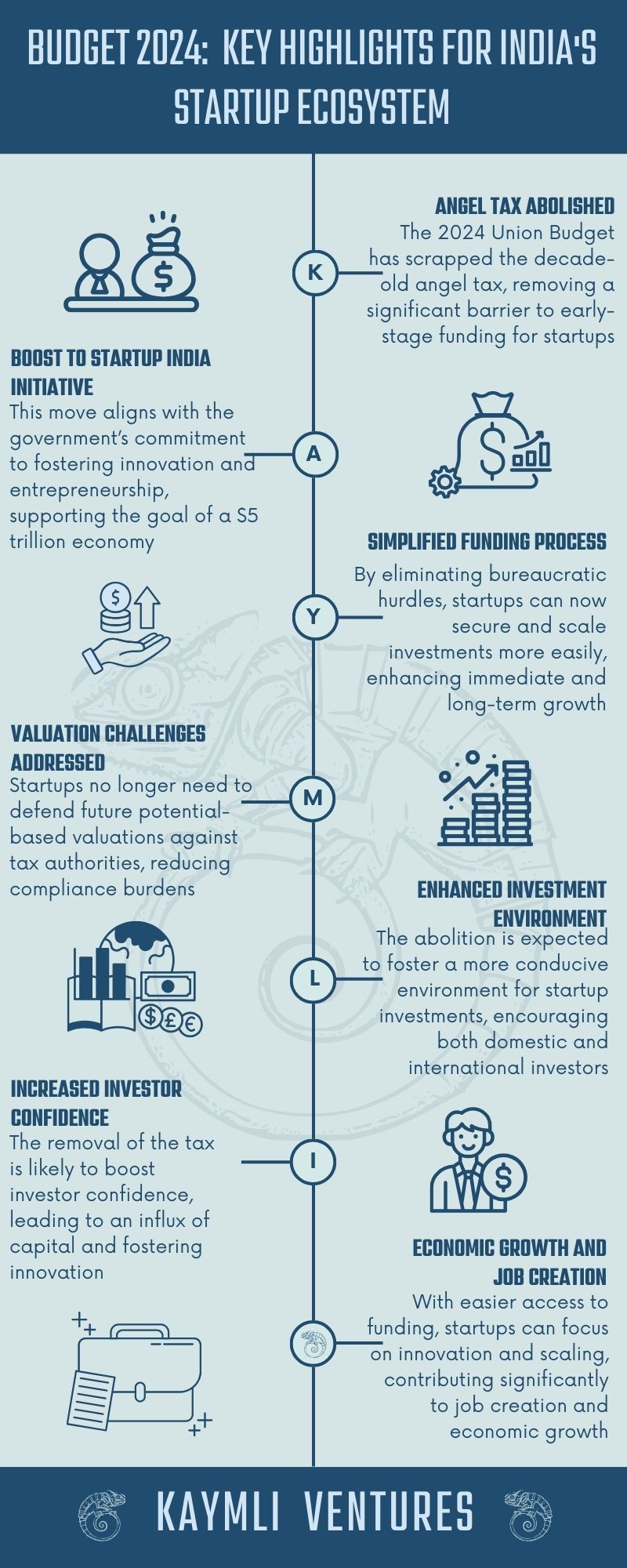
The Union Budget 2024 has brought a wave of optimism to the Indian startup ecosystem with the announcement of the scrapping of the angel tax. As I delved into the details, it became clear that this is not just a policy change but a transformative moment for startups and investors alike.
Angel tax, introduced a decade ago, had long been a thorn in the side of India’s burgeoning startup scene. By taxing investments above fair market value, it created significant obstacles for startups trying to secure early-stage funding. This often led to prolonged scrutiny and complex paperwork, diverting focus from core business activities.
The removal of this tax marks a significant shift. It aligns perfectly with the government’s Startup India initiative, reinforcing its commitment to fostering innovation and entrepreneurship. The impact of this move is expected to be far-reaching. Startups can now access investments more freely, driving job creation and innovation across various sectors. This change is pivotal in steering the nation towards its ambitious goal of a $5 trillion economy.
The simplification of the funding process is another crucial aspect of this reform. By eliminating bureaucratic hurdles, the government has made it easier for startups to secure and scale investments. This, in turn, is expected to enhance both immediate and long-term growth, contributing significantly to India’s global competitiveness and economic aspirations.
One of the key challenges startups faced under the angel tax regime was defending their valuations, often based on future potential rather than current financial metrics. Tax authorities sometimes deemed these valuations as inflated, leading to tax demands. The abolition of this tax removes a significant burden, allowing startups to focus on innovation and scaling their operations, thereby contributing to job creation and economic growth.
The experts in the field unanimously agree that this move will foster a more conducive environment for startup investments. By reducing the compliance burden and financial strain, it will be easier for startups to raise early-stage capital. This is likely to lead to a surge in new startups and entrepreneurial ventures, creating a more vibrant and dynamic entrepreneurial ecosystem.
Moreover, the abolition of the angel tax is expected to boost the confidence of both domestic and international angel investors. This could lead to an influx of capital, fostering innovation and growth in the startup ecosystem. The Budget 2024 decision addresses long-standing concerns, paving the way for a more vibrant and dynamic entrepreneurial landscape in India.
In summary, the scrapping of the angel tax is a landmark decision that holds the promise of a brighter future for Indian startups. It not only removes a significant funding obstacle but also aligns with the broader goals of promoting ease of doing business and fostering a culture of innovation in the country. This move is set to create a robust and supportive investment environment, driving economic growth and reinforcing India’s position as a global startup hub.